 Webagentur lilac-media | Webdesign und Programmierung


You are here: Blog
Author: (with the help of ChatGPT) | Reading time approximately: 5 min | last modified: 10.03.2026
Blog about Website and Marketing
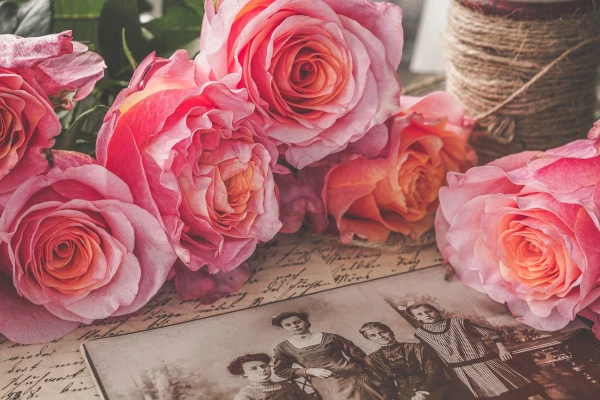
With a writing style that today seems unusually ornate, a hundred years ago people were lured from their cozy Biedermeier living rooms into the excursion gastronomy of Halle's city forest:
„To a highly esteemed audience … for your kind information, that with Sunday, the 1st Pentecost in the heath near the Heideschlösschen a forest restaurant will open. I will do everything in my power to satisfy the guests who honor me and most kindly request your favorable goodwill and support for my new enterprise.“
(Advertisement in the Saale-Zeitung from 1904)
How strange that sounds today! I try to place myself in the spirit of life. Much embellishment and ornamentation with a great distance to the target audience. These stilted writing efforts were surely due to the then understanding of politeness.
I see pictures in front of me: stiff fashion, starched shirts, cinched waists, parasols, top hats, walking sticks, twirled mustaches.
I think of class differences. The „gnädige Frau“, who politely receives a whispered hand kiss from a frock-coated gentleman. The neat maid with a lace apron, bowing before his lordship.
This advertising copy, around 1900, during the Gründerzeit, surely hit the lifestyle of the bourgeois society.
In contrast, I notice how uncomplicated our current manners have become. That today in modern advertising language there is no longer any politely meant distance rules. Loud and direct advertising lures us, as we have now built up a thick shield of perception. It must cut through quickly and crisply!!!
Perhaps that could be a completely new entry into telemarketing? 'Most esteemed subscriber, for your kind information that I herewith in all form and courtesy wish to offer you an advertising promise. Would you lend me a few minutes of your precious time to lend your willing ear? It shall not be to your detriment. I will do everything to make my offer especially appealing to you.'
If the recipient has listened up to that point, their mouth will surely be agape with astonishment.
With what kind of advertising copy do you present yourself on your homepage? Do you speak the language of your target audience? Do you capture the lifestyle of your readers?
We are now in the year 2026 and Generative AI has entered our daily life. I have asked Generative AI to, in the style of this advertisement text, create a description of how the people in Halle on the Saale lived around 1900.
Dear esteemed audience,
It fills me with joy to present to you a vivid depiction of the life of the people in the city of Halle on the Saale around the year 1900. In those times the city was a pulsating center for culture, commerce and education.
The inhabitants of Halle on the Saale were at that time witnesses to the rapid changes that came with advancing industrialization. Factories and companies appeared, bringing new job opportunities and economic upswing. These changes drew many people from rural areas into the city, in search of better living conditions and new opportunities.
The streets of the city came alive with a variety of people. Although most were still traveling on foot, streetcars and horse-drawn carriages grew increasingly popular as means of transport. The sound of hoofs and the clatter of wheels filled the Jugendstil-influenced streets.
Social life blossomed in the many theatres, concert halls and museums. Artists, musicians and actors moved to the city in large numbers and contributed to a rich cultural offering. People loved gathering in splendid ballrooms and taking part in elegant festivities.
The education system in Halle also offered much. The renowned university provided an intellectual atmosphere and attracted professors and students from all over the world. People had access to first-class education and the city's libraries were treasures of knowledge.
Despite growing commercialization and technological progress, the residents of Halle on the Saale clung to their traditions. Trade fairs, traditional markets and folk festivals were fixed components of urban life and offered opportunities for gatherings and the exchange of goods and services.
The people in Halle on the Saale around the year 1900 strived to beautify and maintain their urban surroundings. Magnificent parks and gardens, such as the Peißnitz Park, offered residents a retreat from the hustle and bustle of urban life. Here one could take a walk, rest, and enjoy nature.
The social life of the inhabitants was shaped by a strong community and mutual support. Neighbors often knew each other for many years and helped each other in difficult times. Community events such as club festivals or neighborhood meetings strengthened cohesion and social bonds.
In terms of housing there was a variety of buildings reflecting the architectural style of the era. From Art Nouveau villas to elegant rental houses, Halle offered a multifaceted housing stock for people of different social strata.
Of course there were also challenges and social inequalities, as is common in growing cities. Workers fought for fairer working conditions while industry expansion and growth occurred. Nevertheless, life in Halle on the Saale around 1900 was marked by a spirit of progress, cultural richness, and social community.
We hope that this presentation of life in Halle on the Saale around 1900 has provided you with interesting insights and inspired you to dive deeper into the history of this dynamic era.
Erstveröffentlichung am 27.05.2020